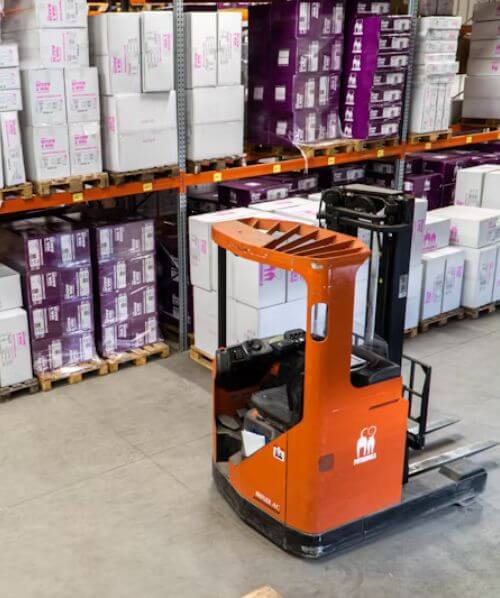
Inventory management is fundamental to ensure the operability and competitiveness of any company. Its importance is especially relevant in logistics sectors, where proper stock management can be the difference between success and loss of business opportunities.
Excel has traditionally been the tool of choice for inventory management, due to its affordable cost and ease of use. However, this solution is only efficient in the early stages of a business, its limitations become noticeable in growing companies for more complex operations.
As experts in business automation and digitisation, we want to highlight the main limitations of Excel in inventory management and how they can affect business efficiency. In addition, we will discuss technological alternatives specifically designed to solve these problems and optimise inventory control in any type of operation.
Limitations of Excel in inventory management
Insufficient scalability
One of the biggest drawbacks of Excel is its inability to handle large volumes of data efficiently. As a business grows, the volume and complexity of information increases exponentially, revealing the following problems:
- Difficulty handling massive data: Handling spreadsheets with thousands of rows and columns can affect software performance, slowing down processes.
- Data consolidation problems: In companies with multiple warehouses or distribution channels, maintaining a global, real-time view of inventory is virtually impossible with Excel.
Real case:
Here is a real case we encountered and the solution to the problem.
- Sector: Logistics and distribution of industrial packaging. A company with five dispersed warehouses in different locations using Excel.
- Size: 150 employees
- Locations: 5 warehouses in Madrid, Barcelona, Valencia, Seville and Bilbao
- Annual turnover: 10 million euros
Description:
Company specialising in the distribution of industrial packaging for sectors such as automotive, food and e-commerce. They offer a wide range of products, from cardboard boxes to customised packaging solutions. Their value proposition is based on guaranteeing fast deliveries that keep manufacturing lines uninterrupted.
Problem identified:
With accelerated growth over the past five years, the company had not updated its inventory management system, relying exclusively on Excel to control stock in its five warehouses. This method was causing frequent problems such as duplicate orders, lack of visibility on available products and delivery delays, affecting its efficiency promise to customers.
Solution implemented:
Our team designed and implemented a customised management system that allows:
- Synchronise in real time the stock of all warehouses.
- Generate automatic alerts to avoid overstock or stock-outs.
- Improve product traceability throughout the logistics chain.
Thanks to this solution, they have managed to reduce errors by 80%, optimise response times to their customers and remain one of the leading companies in the sector.
High incidence of human error
Excel relies heavily on manual data entry, which significantly increases the likelihood of errors, especially in high-volume environments. These types of errors can be summarised in two main groups.
Data entry errors
A single incorrectly entered digit can alter the inventory balance, leading to erroneous decisions such as unnecessary purchases or supply failures. Out of stock products without the system reflecting this, affecting customer satisfaction. Excess inventories that increase storage costs and affect cash flow.
Absence of automatic validations
Excel lacks advanced controls to prevent errors, such as alerts for inconsistencies or duplication of information. It lacks advanced functions to integrate transport and logistics software or automate processes, forcing repetitive tasks to be performed manually:
- Disconnected processes: Users must export and import data between different platforms, which consumes time and increases the risk of errors.
- Repetitive manual tasks: Updating entries, generating reports and performing calculations are activities that slow down operations.
Lack of automation not only reduces operational efficiency, but also limits the ability to respond to unforeseen events, such as rapid changes in demand. This can result in shipment delays, loss of customers and reduced competitiveness in dynamic markets.
Technological alternatives to Excel for inventory management
There are many options to scale and solve the cases that Excel cannot solve, providing specific and scalable solutions for inventory management.
Inventory Management Systems (IMS)
Inventory Management Systems (IMS) are solutions that we have implemented in numerous logistics companies, centralising inventory control and eliminating the inefficiencies and errors associated with the use of Excel.
What you get:
- Real-time updates: Automatic data synchronisation between warehouses, physical shops and e-commerce platforms, allowing constant visibility of inventory.
- Customised alerts: Configuration of notifications for replenishment, products close to expiry or stock discrepancies, improving accuracy and anticipation in management.
- Scalability: Ability to handle large volumes of data and adapt to business growth without compromising system performance.
Integration with ERP and CRM
ERP (Enterprise Resource Planning) and CRM (Customer Relationship Management) systems integrate inventory with other key business processes, such as sales, production and logistics, on a single centralised platform.
What you get:
- Centralised and synchronised data: All inventory information is unified, reducing inconsistencies and facilitating cross-departmental collaboration.
- Advanced analytics: Ability to generate detailed reports and make predictions based on historical data, enabling more informed decision making.
Traceability and security systems
Traceability and security are essential to ensure the accuracy and protection of inventory data, especially in regulated sectors such as food, pharmaceuticals and logistics.
What you get:
- Real-time tracking: Allows each product to be tracked from its origin to its final destination, improving quality control and facilitating returns management.
- Advanced data protection: Encryption of information and personalised authentication to protect sensitive supplier, customer and internal operations data.
Conclusion
While Excel can be a useful tool in the early stages of a business, organisations that aspire to grow and remain competitive must adopt more robust and customised solutions to manage their inventory. Implementing these tools not only drives efficiency and accuracy, but also creates a solid foundation for long-term, sustainable success.